Tuesday, May 29, 2012

Voices of Fiction - Character versus Plot - Part Two

Welcome to Voices of Fiction.

We have another great group of writers here to discuss ‘Character versus Plot’

Please welcome our guests.


Terry W. Ervin II is an English and Science teacher who enjoys writing. He’s an editor for the speculative fiction magazine MindFlights and his short stories have appeared in over a dozen anthologies, magazines and ezines. The genres range from science fiction and fantasy to horror and inspirational.
In 2009 Gryphonwood Press published Terry’s debut fantasy novel FLANK HAWK, and released BLOOD SWORD in 2011. He is busy working on the third novel in the First Civilization’s Legacy series. Website, Blog

Pembroke Sinclair - I write fiction under the pen name Pembroke Sinclair, and I have had several short stories published. My story, “Sohei,” was named one of the Best Stories of 2008 by The Cynic Online Magazine. I have novellas and a short story collection forthcoming from Musa Publishing and eTreasures Publishing. I have two novels, Coming from Nowhere (adult, sci fi) and Life After the Undead (YA, horror), that are available from eTreasures Publishing, as well as Death to the Undead (YA, sequel to Life After the Undead), which is forthcoming. Under my real name, Jessica Robinson, from March 2008 to January 2011, I wrote scientific articles for Western Farmer-Stockman. I have a nonfiction book, Life Lessons from Slasher Films, scheduled for release in July 2012 from Scarecrow Publishing (an imprint of Rowan and Littlefield). Blog, Link, Link

Catrina Barton is a reader and writer of YA and Paranormal Romance, who enjoys being surrounded by the stark beauty of mother nature - whether it's a moon lit starry sky, or a picnic by a peaceful waterfall cascading from the mountain side. She is a proud member of Nano, RBRU, SheWrites and PNRWriters. She is an active participant at Critique Circle and several other crit groups. Blog, Facebook 


Carole Ann Moleti is a nurse-midwife in New York City, thus explaining her fascination with all things paranormal, urban fantasy, and space opera. Her newest fiction is featured in Haunted: Ten Tales of Ghosts and Bites: Ten Tales of Vampires.Website, Blog, Twitter
Welcome Authors! It’s wonderful to have you back for another round.

Now the question is: What comes first, the character or the plot?

Terry W. Ervin II: Generally what comes first is an event or situation, whether it’s wondering what happens to a soul trapped in a cryogenically frozen body, or a team of drug dogs searching a high school and finding drugs in a student’s locker—but they’re not that student’s drugs. The initial thought that sparked my first published novel occurred while thinking about two books: Roger Zelazny’s Guns of Avalon and Harry Turtledove’s World War: In the Balance. A main turning point in Guns of Avalon occurs when Prince Corwin discovers a way to get gunpowder to function in the magical city of Amber. In the Balance is about an alien invasion during the World War II. The technological disparity between the invaders and humanity is a major element in the novel’s conflict. That sparked the question: What would happen if a dragon encountered a World War II aircraft? From there I devised a world where such an encounter could take place. Then came the people and creatures that would inhabit the world and how it came to be. Finally, came Krish and Lilly, Roos and Road Toad—the novel’s main characters.

Pembroke Sinclair: Depends on the story. And then it can change once I get writing. Sometimes, characters like to take the story over and lead me in different directions. I like it when that happens. Sometimes, the plot twists itself. That's fun too.

Catrina Barton: It depends on the story. Most times it's the main character and their love interest. I try imagining them in different situations and places. But occasionally it's the plot that will jump out at me and refuse to be ignored. I start with whichever is the most persistent.

Carole Ann Moleti: Usually the kernel of a plot occurs to me first, but I usually know right away the sex, age and situation of the main characters. Once I flesh out the characters (I spend a lot of time developing their profiles, including doing astrological charts and Tarot spreads), the plot points and twists fall into place.

Thank you all for joining us today and sharing your techniques.

Readers feel free to ask questions concerning this topic in the comments. Also feel free to send questions to chergreen@chergreen.com Subject: Voices of Fiction Question, and have them answered by the participating authors in later editions.

There’s also room for more authors to participate. Drop me an email, Subject: Voices of Fiction.

(Disclaimer - Bios and answers have been posted as submitted by author) 

Part One
Part Three

Saturday, May 26, 2012

From Aspiring Writer to Published Author


Stop by Love Romance Passion to read my guest post, "From Aspiring Writer to Published Author." It's a journey I'd take again without a second thought. And, there's so much more to come on the twisted roads ahead.


Tuesday, May 22, 2012

Voices of Fiction - Character versus Plot - Part One


Welcome to Voices of Fiction.

Today and over the next few weeks, we are exploring what comes first, character or plot. Some authors create a cast of characters and set them into motion. Others develop a plot and then cast characters into roles to fulfill the actions. And, of course, there are those somewhere in between.

I hope you all enjoy this part of the series.

Please welcome this wonderful group of authors.


Cherie Reich is a writer, freelance editor, book blogger, and library assistant living in Virginia. She is a member of Valley Writers and the Virginia Writers Club. Links – Website, Blog, Facebook


Joylene Butler is the author of Dead Witness and Broken But Not Dead. Links – Website, Blog


Cindy Huefner Cromer, formally a New Jersey resident, now resides in Stuart, Florida, with her husband, son, and daughter. Cindy works as a laboratory scientist and executive. As the president of a laboratory network, she has written numerous laboratory procedures and research documents. Driven by a passion for suspense and mystery novels, she dreamed of becoming a writer. Her dream turned into reality with the release of her debut suspense novel, Desperate Measures. She is currently working on her second novel, Desperate Deceptions. Plans are in place for her third and fourth books.  Website, Link, Link


Thea Landen writes erotic literature, frequently in a sci-fi/fantasy setting. When she's not writing, or thinking about writing, her hands and mind are occupied by either yarn crafts or role-playing games. Blog, Link, Link


Jared Gullage, an English Language Arts teacher in Alabama, is the author of Drinna, The Dustfinders, and The Afterknight. Through his father's introduction to books like The Hobbit, Great Expectations, and works by Ray Bradbury, Jared discovered a universe within his own imagination. Jared put his vision to work through role-play games and then storytelling. Following his father's words, "paint pictures with words", this compulsive writer plans to leave his mark upon the writing world, one dent at a time.

Welcome Authors! It’s wonderful to have you back for another round.

Now the question is: What comes first, the character or the plot? 

Cherie Reich: Character comes first and followed very closely behind by the plot.

Joylene Butler: The character. She or he comes to me long before I know their story. I actually try to ignore them because I'm usually busy on an unfinished manuscript. They hang around until I'm ready, moving through my mind like a video. Sometimes it's as if they're trying to figure out if they can trust me.

Cindy Huefner Cromer: Definitely the character. My writing is character driven and I can’t help but introduce each one into the plot with a hidden secret or cloaked in suspicion, regardless of how minor or major their role is. When editing my second book, Desperate Deceptions, I had every intention to scrap a scene and character in the beginning. However, during the process, inspiration hit and now this character is an integral part of the plot. Readers have commented that I have a lot of characters but tie them up in the ending. I flinch when I hear this because I don’t enjoy books where the author introduces every character in the first few chapters in a slug with their whole history. My top priority is to introduce each character slowly into the book and make the reader want to know more about them and what they are hiding.

Thea Landen: The plot usually comes first for me. I think of an idea, a story arc, what I want to happen, and then I see how characters fit into that. Sometimes it's just one or two characters to get the point across. Sometimes it's a whole army. (In the aforementioned future work, it might LITERALLY be a whole army!)

Jared Gullage: The idea usually starts with a plot, but I like to create characters more. I think theme and character are the stuff that truly good stories are made of. If you have good characters, you can put them anywhere, doing anything, and people will still enjoy it. If you have bad characters, no amount of plot will save them.

Thank you all for joining us today and sharing your techniques.

Readers feel free to ask questions concerning this topic in the comments. Also feel free to send questions to chergreen@chergreen.com Subject: Voices of Fiction Question, and have them answered by the participating authors in later editions.

There’s also room for more authors to participate. Drop me an email, Subject: Voices of Fiction.

(Disclaimer - Bios and answers have been posted as submitted by author) 

Character vs Plot - Part Two

Tuesday, May 15, 2012

Voices of Fiction - From Idea to First Draft - Wrap Up

Welcome to Voices of Fiction. We've spent the last few weeks learning about a group of writers and the different processes of moving "From Idea to First Draft."

Based on the many different answers of eighteen writers, plotters outweigh the pantsers, 12 to 6. The methods vary for each plotter, from scene descriptions to head plotting, but plotting all the same. As do the pantsers' process, moving from character creating to writing straight through, to other processes.

As we wrap up this topic, for now, I'd like to share my process with you.

Always remember, each book may produce a different method of creating, and as you move through your journey, you may develop new techniques to go with the old. Short works may develop in a different manner than longer pieces.

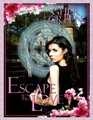
Escape to Love, available at eTreasures Publishing, is a short novella at under 11,000 words and could easily be considered a short story by many.

The creation of this story began with a fifteen minute free-writing session. This produced a snapshot of a woman lost in a dark portal and a man trying to save her.

From there, I brainstormed on who these two people were, what type of portal, where the portal lead, and so on. I also knew my ending.

Then, I wrote from beginning to end. I logged each scene as I wrote, jotted down notes on anything new that needed to be built up earlier in the story. Basically, pantser style, from idea to first 'very' rough draft.

Thank you all for joining in as we explored "From Idea to First Draft."

Next week, we'll begin exploring another topic on "Voices of Fiction." Feel free to join in.

Readers send questions to chergreen@chergreen.com, Subject: Voices of Fiction Question, and have them answered by the participating authors in later editions.

There’s also room for more authors to participate. Drop me an email, Subject: Voices of Fiction.

Part One – Cherie Reich, Joylene Butler, Karina Kantas, Jade Varden 

Part Two – Clara Bowman-Jahn, T. W. Ervin II, Vicki Batman, Thea Landen

Part Three - Barbara Ehrentreu, Catrina Barton, Cara Marsi, Pembroke Sinclair  

Part Four -Jared Gullage, Reno Charlton, Cindy Cromer, Ellen Spain, Carole Ann Moleti, Pat Andres
 
Blog Directory